“You’re confused. Your illness is getting worse,” she insisted. I didn’t confront her. Instead, I secretly called a private investigator. But the photograph that little girl handed me exposed a secret far more horrifying than I ever expected.
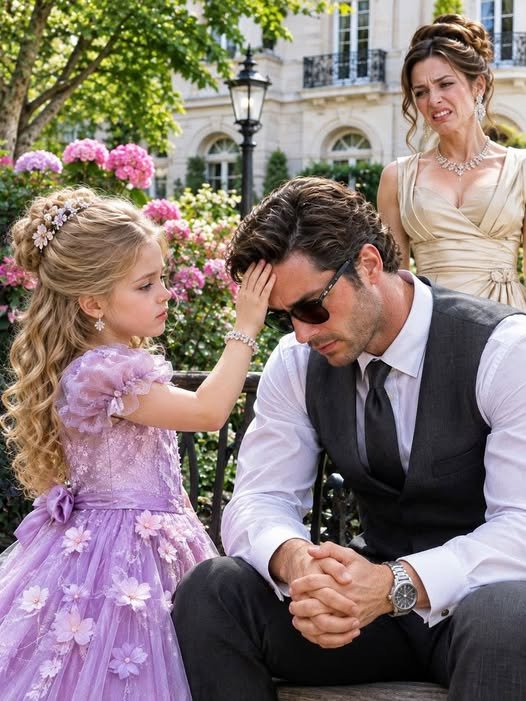
PART 1
“You’re not going blind, mister. Your wife has been putting something in your food for months.”
The words came from a ten-year-old girl in a purple sweatshirt and worn-out sneakers, right in the middle of the Annapolis waterfront on a bright Saturday morning.
Gordon Whitfield, a fifty-four-year-old businessman, stopped dead.
Beside him, his wife, Lorraine, tightened her grip on his arm so hard it hurt.
“Don’t bother my husband, sweetheart. He’s sick,” she said, nudging the girl aside.
But the child didn’t back away.
“Then ask her why you see better when you don’t eat breakfast at home.”
A chill ran down Gordon’s spine.
For four months his eyesight had been failing for no reason anyone could explain. First the print on contracts blurred. Then the faces of his employees. Lately he had needed help just to get down the stairs.
The specialists at Johns Hopkins had ordered more tests. None had confirmed he would lose his sight permanently.
Lorraine, though, kept telling him to prepare for the worst.
“Come on, honey,” she said sweetly. “Don’t listen to nonsense.” She steered him gently away.
Gordon turned his head.
The girl was still watching him.
It wasn’t the look of a child asking for money. It was the look of someone desperate to prevent a tragedy.
That night, in their house on the Severn River, Gordon watched Lorraine fix dinner.
They had been married eight years. She had come into his life while he was still mourning his first wife, warm, patient, and understanding. Now she managed his medications, his appointments, even the calls from his employees.
“I made you the smoothie your specialist recommended,” she announced, setting a glass in front of him.
Gordon recognized the sweet smell. For months, Lorraine had insisted he drink one every night.
“I think I’ll have water tonight.”
Her smile vanished.
“Gordon, don’t start. If you want to get better, you have to cooperate.”
“What if I call the doctor myself tomorrow?”
Lorraine set her spoon down.
“You know how busy he is. I handle everything.”
Gordon pretended to give in.
When she left the kitchen, he poured a small sample of the smoothie into a clean container and left the rest untouched.
Something remarkable happened in the early hours of the morning. When he woke, he could clearly make out the glowing numbers on the clock.
3:17.
He hadn’t been able to read them in weeks.
The next day, he pretended to drink the breakfast Lorraine prepared and left it untouched when she turned away. Then he asked his driver to take him to the waterfront.
The girl was sitting near the city dock.
“I knew you’d come back,” she said.
“What’s your name?”
“Ally.”
“Ally, I need to know why you said that about my wife.”
She looked at the ground.
“Because my dad got sick too, after he took things somebody he trusted gave him.”
Gordon sat down slowly.
“What happened to him?”
Ally pressed her lips together.
“He died. And nobody would listen when I said something was wrong.”
Gordon’s stomach knotted.
“How do you know what Lorraine does?”
“I’ve seen her buy things at a pharmacy way across town. I’ve seen her meet a man. They always look around before they talk.”
Gordon wanted to ask more, but the girl lifted her head sharply. Her face lost its color.
“Mr. Gordon, don’t turn around.”
“Why not?”
Ally leaned close to his ear.
“Because that man is right behind us. And he just took your picture.”
PART 2
Gordon stayed perfectly still.
Ally pretended to tie her shoelaces while she watched the stranger out of the corner of her eye. He turned and walked off down a side street.
“That’s the one who visits your wife,” she whispered.
That afternoon, Gordon called Ray Ibsen, an old friend and private investigator in Baltimore. He also booked an urgent appointment with an independent ophthalmologist, Dr. Priya Nair, who had no connection to his regular team. He described his symptoms, handed over the samples he’d saved, and asked for medical and toxicology testing.
Dr. Nair was careful.
“I can’t name a cause without analyzing these samples. But given your suspicions, avoid anything you haven’t prepared yourself, and stay somewhere safe.”
Gordon went home pretending nothing had changed.
At 11:40 that night, Lorraine slipped out to the back deck to make a phone call. He listened from the hallway.
“He’s getting his vision back, Dennis. I told you something was wrong.”
A pause.
“I’m not waiting another six months. If we can’t get him declared incapacitated, we change the plan.”
Gordon’s legs shook.
The next day, Ray spread photographs across a table. Lorraine was kissing a man outside a private clinic.
“His name is Dennis Maddox,” Ray said. “He’s a physician, but not an eye doctor. And there’s more.”
He laid down copies of public records.
“Your wife used a different last name before she married you. She’s been married before, and three of her husbands died in circumstances that deserve a closer look.”
Gordon put his hands over his face.
“You’re telling me I’m next.”
“I’m telling you to leave the house and file a report. The history alone doesn’t prove a crime.”
Gordon thought immediately of Ally.
He found her that evening at a bus stop.
“I don’t want you coming near my house or following those people again,” he told her. “It’s dangerous.”
She nodded, but her eyes filled with tears.
“My dad said it was nothing too. Then he didn’t come back.”
Gordon knelt in front of her.
“This time we let the grown-ups who can protect us help.”
Ally dug a folded photograph out of her pocket.
“My aunt found this in my dad’s things.”
Gordon unfolded it. It showed Dennis Maddox, a younger woman, and Ally’s father, all standing outside a clinic. On the back was a date from five years earlier.
But what chilled him wasn’t the photograph. It was Ally’s face as she pointed at the woman.
“That’s my mom. And the lady living with you is her sister.”
PART 3
It took Gordon several seconds to understand.
He looked at the photograph. Then at Ally.
“Are you sure?”
She nodded.
“My mom’s name was Rachel Doyle. Her sister, Lorraine, came some Christmases. When my dad got sick, she stopped visiting. After the accident, I never saw her again.”
A crushing pressure settled on Gordon’s chest. The child who had tried to save him was connected to the woman who might be trying to destroy him.
“Does your aunt know you came to talk to me?”
“No. My aunt Lucy cleans vacation rentals. She gets home really tired. I didn’t want to worry her.”
Gordon tucked the photograph away carefully.
“Then we need to talk to her. And this time, we don’t hide anything.”
That same afternoon, with Ray beside him, he went to the small apartment Lucy and Ally shared in a modest neighborhood of Annapolis.
Lucy Doyle was forty-two, with hands worn rough by years of work. When she learned who Gordon was, her face hardened.
“You’re married to Lorraine?”
“Yes.”
“Then you should leave.”
Gordon didn’t move.
“I believe your sister is trying to hurt me. And Ally saved me from going on ignoring it.”
Lucy stared at her niece in horror.
“You’ve been talking to this man without telling me?”
“Aunt Lucy, I was scared the same thing would happen to him that happened to Dad.”
Those words broke Lucy’s resistance. She sat by the window and began to cry.
For years she had carried a suspicion nobody wanted to hear. Her sister Rachel had a stormy relationship with Dennis Maddox. When Rachel tried to leave him, her husband began suffering unexplained dizziness and heart trouble. Shortly before the accident that killed them both, Rachel had called Lucy.
“She said she’d found out something terrible about Dennis and Lorraine,” Lucy remembered. “She wanted to show me some papers, but she died first.”
“Where are those papers?” Ray asked.
Lucy opened a closet and pulled out a cardboard box. Inside were photographs, letters, and a notebook in which Rachel had written dates, dollar amounts, and patients’ names.
The last page held one line, scrawled in haste:
“Dennis doesn’t work alone. Lorraine goes after men with money. I don’t want any part of it anymore.”
Gordon felt sick. The woman who slept beside him wasn’t merely unfaithful. She might be part of something much darker.
Ray urged Lucy not to hand over the originals to anyone without legal advice, and he contacted the police to pass along the information.
The next day, Gordon filed a formal report. He turned over the containers he had saved, his medical records, and messages about the supposed treatments. The samples went to a lab. Police began looking into the earlier deaths as well, though suspicion alone was not proof.
Meanwhile Gordon moved into a hotel, far from Lorraine. He never again accepted a drink she had prepared.
The first test results came four days later. Dr. Nair called him herself.
“We found substances in the product you gave us that have no business being there. Some can cause visual disturbances and other serious symptoms. We need to complete the analysis and monitor your recovery.”
Gordon sat in silence. For months he had believed his own body was betraying him. Now he knew someone might have used his trust against him.
The investigation advanced when detectives found records tied to Dennis and certain purchases made by Lorraine. They also flagged suspicious transfers to companies linked to the doctor.
But the decisive discovery came from Gordon’s own office. His attorney went through the papers Lorraine had asked him to sign during his illness. Among them was a power of attorney giving her sweeping authority and a draft that would have changed how his estate was handled.
Gordon vaguely remembered those conversations. Lorraine had told him they were simple protective measures.
“If you ever can’t sign, someone has to take care of everything,” she used to say.
The power of attorney was never finalized, but investigators considered the paperwork relevant to a possible financial motive.
When Lorraine learned he had left the house, she called him seventeen times. Finally he answered, with Ray at his side.
“Where are you?” she asked. “I’m worried sick.”
“I’m safe.”
“What does that mean?”
“It means I’ve talked to doctors you didn’t choose.”
Lorraine was silent.
“Gordon, you’re confused. The illness is affecting you.”
“I’ve also talked to Lucy Doyle.”
A ragged breath came through the phone.
“Lucy?”
“And I’ve seen the photograph of Dennis with your sister Rachel.”
It took her several seconds to answer.
“You don’t know what you’re getting into.”
“That’s exactly what I intend to find out.”
The call ended abruptly.
Hours later, investigators learned that Lorraine and Dennis were preparing to leave town in a hurry. Both were arrested in connection with the judicial proceedings already underway.
Gordon heard the news sitting in his lawyer’s office. He felt no joy, only an exhaustion so deep he could barely speak. He had spent eight years with a person whose real face he’d never seen. That night he thought of his wedding, their vacations, quiet breakfasts, anniversaries. Everything seemed tainted by a single question: how much of it had been real?
The following weeks were hard. Gordon’s vision returned gradually under medical supervision, and specialists ruled out any serious permanent damage. But he needed counseling to sleep without waking in a panic. Some nights he woke certain Lorraine was standing by the bed. Other times he imagined the sound of a spoon stirring a glass.
There were things his eyes could see now that his heart still couldn’t accept.
The investigation uncovered links between Dennis and a series of fraudulent schemes involving wealthy patients. Old deaths were reopened, including those of Ally’s parents. The documents Rachel and Lucy had kept led detectives to witnesses nobody had identified before. Not every suspicion could be proven, but the medical, financial, and documentary evidence was enough to support serious charges.
The legal process lasted months. Gordon testified about the medications, his conversations with Lorraine, and his gradual decline. Lucy testified about her sister’s phone call. Ally, because of her age, was heard only through child-protection procedures, never forced to face the accused.
In the court’s final ruling, Dennis and Lorraine were convicted of the crimes that could be established, including the harm done to Gordon and the fraud. The case of Ally’s parents stayed open longer.
But the girl had already achieved something she’d thought impossible.
Someone had listened.
One spring afternoon, Gordon went back to the waterfront. He no longer wore dark glasses. The white buildings, the gulls over the bay, and the sailboats in the harbor seemed brighter than he remembered.
Ally was waiting with Lucy.
“Mr. Gordon!” she shouted, running to him.
He crouched to catch her hug.
“How are those eyes?” she asked.
“Much better. Though I’ve still got a lot to learn about how to look.”
Lucy smiled shyly.
He took them for hot chocolate at a café nearby, and over the table he said he had a proposal.
“Ally deserves to go to school without worrying whether there’s money for books. And you, Lucy, deserve a job where you don’t clean four rentals a day just to make rent.”
Lucy set her cup down.
“We don’t want charity, Gordon.”
“I’m not offering charity.”
He explained that his company needed someone to coordinate maintenance services across several buildings. It was a paid position with a contract and training.
“I’ve seen how you run your work and how you’ve cared for Ally under impossible circumstances. I think you can do this. You’ll go through the same hiring process as anyone else.”
Then he looked at the girl.
“And I want to fund your education through a scholarship. Not because you owe me anything. Because no one should lose a chance for lack of money.”
Ally was quiet.
“What do you want in return?”
A pang of sadness went through Gordon. That question should never have been part of a child’s worries.
“Nothing.”
“Really?”
“Really. Your aunt will decide what’s best for you.”
Lucy studied him for a long while. At last she held out her hand.
“We’ll agree to talk about it. But Ally keeps living with me and making her own decisions.”
“Of course.”
Ally smiled. For the first time since he’d known her, she looked like someone her age with nothing on her mind.
A year passed.
Ally turned eleven and started at a school where she got extra academic support and found friends to spend her afternoons with. She was still observant. She noticed when a classmate was sad, when someone ate lunch alone, when a teacher needed help. But she had stopped feeling responsible for spotting every danger in the world.
Lucy earned the coordinator position after finishing her training. Her salary eased the money worries and left her more time with her niece.
Gordon had changed deeply. He handed off much of his daily work and began volunteering with organizations that protect children in difficult family situations.
Every Sunday the three of them had lunch together. Sometimes at Lucy’s apartment, where there was always a pot of her chili on the stove. Sometimes at Gordon’s, where Ally insisted on baking desserts that usually left the kitchen dusted in flour.
One afternoon, while they were getting ready for her birthday, she found a package wrapped in blue paper. Inside was a hardcover notebook. On the first page Gordon had written:
“For Ally, who listened to what others kept quiet, and looked at what others didn’t want to see.”
She read the dedication twice.
“What do you want me to write?”
“Things that matter.”
“Like what happened with Lorraine?”
“Like that, if you ever want to. But also about your friends, your dreams, and the good things you discover.”
Ally stroked the blank pages.
“I used to only write down things that scared me.”
Gordon’s eyes stung.
“Then maybe it’s time to write down things that make you happy.”
Lucy, listening from the doorway, quietly wiped away a tear.
Months later, a letter arrived. Lorraine wanted to reach him from prison. She claimed to have information about other victims and asked him to speak up for her with the authorities.
Gordon’s first impulse was to tear it up. But that night he talked with Lucy.
“I don’t want to see her again,” he admitted. “I don’t want to hear another lie.”
“You don’t have to,” Lucy said. “If she has useful information, she can give it straight to the courts.”
Gordon passed the letter to his attorney and made no personal contact. He didn’t look for sentimental explanations. He didn’t need an apology to go on living. He had come to understand that forgiveness, if it ever came, didn’t mean trusting again.
The information Lorraine eventually offered through her lawyers helped expand some investigations. Other families got answers after years of uncertainty. Gordon followed the progress from a distance. His life no longer revolved around her. It revolved around the people who had stayed.
Years went by.
Ally finished school with excellent grades and chose to study social work. She wanted to help children who, like her, had learned too young what fear and loss meant.
At her college graduation, Lucy and Gordon sat together in the front rows. Ally walked onto the stage to speak to her classmates. She talked about her childhood, about losing her parents, and about the time when she believed nobody would ever listen to a girl from a modest neighborhood.
Then she looked toward where Lucy and Gordon sat.
“For a long time I thought being brave meant not being afraid. Now I know it means asking for help, trusting the right people, and not letting pain turn us into someone who hurts others.”
Gordon bowed his head. Tears blurred her face. It was a very different feeling from the illness that had nearly taken his sight.
Ally went on:
“My aunt taught me that love is staying when everything gets hard. And Gordon taught me that a family can also be built from people who come into our lives when we least expect them.”
Lucy squeezed his hand.
When the ceremony ended, Ally ran to them. She hugged her aunt first, then Gordon.
“Are you proud of me?”
He smiled through tears. “More than you can imagine.”
“Then I have to tell you something.”
“Go ahead.”
She took his hand.
“For years I was afraid of forgetting my dad’s voice. I thought if I loved someone else, I’d be betraying him.”
Gordon said nothing.
“But I understand now that love doesn’t replace anyone. It just makes more room in your heart.”
Lucy began to cry.
Ally looked straight at Gordon.
“Can I call you Dad?”
The man who had built companies, signed million-dollar contracts, and survived the worst betrayal of his life couldn’t find words. He could only nod.
Ally held him tight.
“Thank you, Dad.”
Gordon closed his eyes.
Many years had passed since the morning a stranger’s child warned him that his wife was hurting him. That day he thought he was losing his sight. He never imagined that, at that very moment, he was beginning to discover what was truly worth looking at.
And as he held Ally and Lucy under the Maryland sun, he understood something no doctor could have taught him:
The most dangerous darkness isn’t always in the eyes. Sometimes it’s in trusting the person who wants to destroy you. And the most unexpected light can come from one small hand that dares to stop you in the middle of the street.