I believed he’d sacrificed our family for someone else.
Yet no new woman ever appeared.
Then, five years later, I walked into his hospital room and barely recognized the frail man lying in the bed.
He looked at me with tears in his eyes.
“Claire, there’s something I need to tell you. I never cheated on you.”
I thought he was lying again.
But when I demanded to know why he’d destroyed our marriage, his answer left me speechless.
And what I discovered next made me wish I could turn back those five lost years.
PART 1: THE LIE THAT ENDED FOURTEEN YEARS OF MARRIAGE
Calvin confessed on a Wednesday evening, shortly after our children had gone upstairs.
We were sitting at the kitchen table when he suddenly said:
“Lorna, I’ve been seeing someone else.”
I stared at him, waiting for an explanation.
“Who is she?”
He lowered his eyes.
“That isn’t important.”
I felt my stomach tighten.
“How long has this been happening?”
He hesitated.
“Long enough.”
Those two words shattered everything I thought I knew about our marriage.
We’d spent fourteen years building a life together.
We had two children, Nell and Reid, a comfortable home, and countless memories.
I couldn’t understand why he would throw it all away.
But Calvin offered no excuses.
He didn’t ask me to forgive him.
He didn’t even try to convince me to stay.
When I told him I wanted a divorce, he simply nodded.
The legal proceedings moved surprisingly quickly.
Calvin made almost no attempt to keep the house. He accepted my receiving most of our savings and agreed to the parenting arrangements without much discussion.
At the time, I interpreted his cooperation as guilt.
Surely he was desperate to start a new life with the woman he’d chosen over me.
I imagined her waiting somewhere, ready to move into the future he’d abandoned our family to pursue.
But something strange happened.
She never appeared.
Our children never mentioned meeting anyone.
Mutual friends occasionally spotted Calvin shopping alone or eating dinner by himself.
He rented a modest apartment across town and gradually withdrew from almost everyone.
He still attended important family occasions.
Birthdays.
Graduations.
School performances.
Whenever Nell or Reid specifically invited him, he usually came.
But he rarely stayed long.
He would congratulate them, offer a quiet smile, and leave before the celebrations ended.
Over time, he became increasingly distant.
I convinced myself it was none of my concern.
He’d made his decision.
He could live with the consequences.
For five years, I told myself I no longer cared what happened to him.
Then, one afternoon, my phone rang.
Calvin’s name appeared on the screen.
I almost ignored it.
We hadn’t had a meaningful conversation in months.
But something made me answer.
“Hello?”
“Lorna?”
His voice sounded faint and unusually strained.
“Calvin? What’s wrong?”
There was a long pause.
“Could you come to the hospital?”
I immediately sat upright.
“The hospital? What happened?”
“Please. I need to see you.”
“Should I call Nell and Reid?”
“No.”
His answer unsettled me.
“Calvin, why not?”
“There’s something I need to tell you first.”
I hesitated.
Then I agreed.
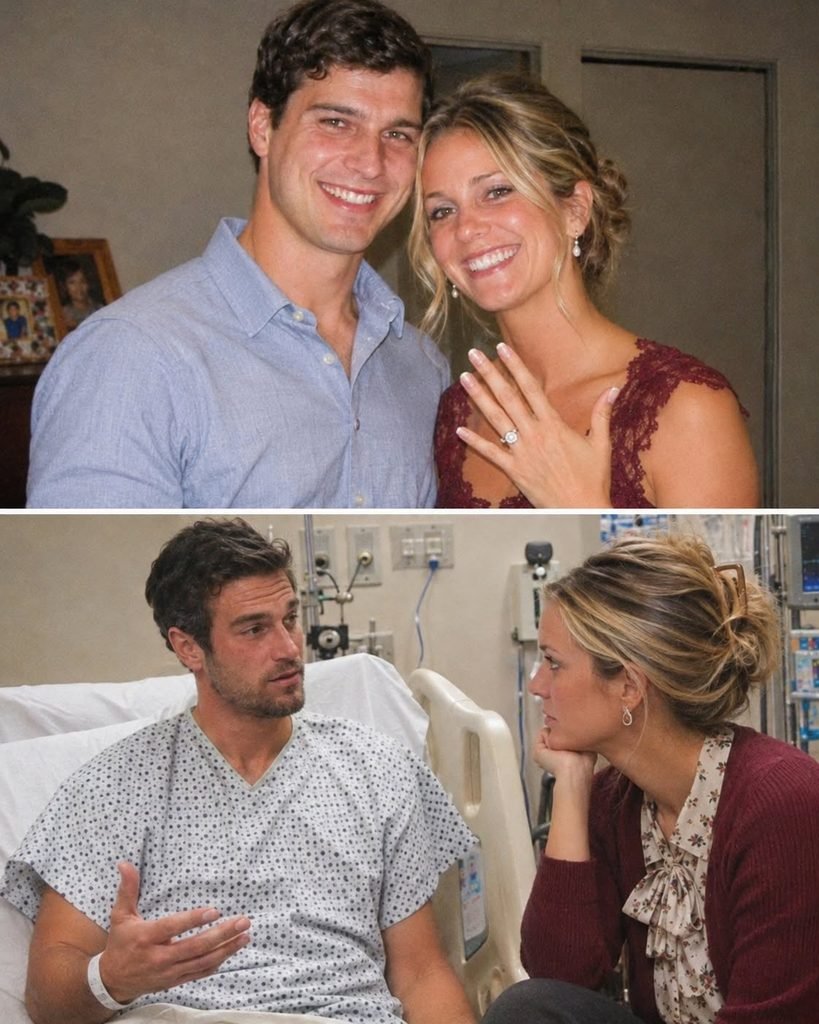
When I entered his hospital room that evening, I stopped in the doorway.
The man lying in the bed barely resembled the husband I remembered.
His face was noticeably thinner, his cheeks hollow, and his skin pale.
Bruises marked one arm, and even adjusting his blanket seemed to require enormous effort.
I wondered how long he’d been in such poor condition.
And how nobody had told me.
He managed a faint smile.
“Thank you for coming.”
I pulled a chair beside his bed.
“Calvin, what’s going on?”
He looked down at his hands.
“There’s something I should have told you five years ago.”
I sighed.
“Please don’t tell me this is about our divorce.”
He nodded.
“It is.”
I felt a familiar frustration rising.
“Calvin, that was years ago. What could you possibly have left to say?”
He looked directly into my eyes.
Then he whispered:
“Lorna, I never had an affair.”
For a moment, I couldn’t react.
Then I laughed bitterly.
“You’re joking.”
He shook his head.
“No.”
I stood up.
“You sat across from me at our kitchen table and admitted you were involved with another woman!”
“I know.”
“You watched me pack your belongings.”
“I know.”
“You allowed our children to believe you’d destroyed our family for someone else!”
Tears filled his eyes.
“I’m sorry.”
I stared at him in disbelief.
“For five years, Calvin, I believed you betrayed me. I blamed myself for not being a better wife. I wondered what I’d done wrong.”
He lowered his head.
“I know, Lorna.”
My hands began trembling.
“And now you’re telling me none of it was true?”
He nodded slowly.
I stepped away from the bed.
“Then why?”
My voice cracked.
“Why would you invent something so cruel? Why would you let me divorce you and hate you for five years?”
Calvin tried to sit straighter.
As he moved, his left hand slipped awkwardly from the blanket.
He struggled to lift it back into place.
I noticed the movement but couldn’t understand what it meant.
His eyes filled with tears again.
“Because I was afraid,” he whispered.
“Afraid of what?”
He took a shaky breath.
“Lorna, five years ago, a doctor told me something I couldn’t bear to tell you.”
I felt a chill.
“What are you talking about?”
Calvin looked toward the medical equipment beside his bed.
Then he turned back to me.
“I wasn’t leaving you for another woman.”
His voice broke.
“I was trying to protect you from what was happening to me.”
I stared at him, unable to speak.
He reached toward a folder lying beside his pillow.
Inside were medical reports, hospital records, and documents dating back to the months before our divorce.
He placed his trembling hand over the folder.
“Everything you need to understand is in here.”
I slowly reached for it.
And as I read the first page, I began to realize that the man I’d spent five years resenting had been carrying a terrible secret all along.
PART 2
The first page was a neurology report, dated three weeks before the night he’d sat across from me at our kitchen table.
Multiple system atrophy.
I read the words twice. Then I turned the page and kept reading, because I couldn’t make myself look up.
“It’s a progressive neurological disease,” Calvin said quietly. “It attacks balance, movement, blood pressure. Eventually swallowing and breathing. There’s no cure. The doctors couldn’t tell me whether it would move slowly or fast.”
I looked at the machines around his bed.
“Is that why you’re here?”
“I fainted in my apartment. I fell and couldn’t get up. A neighbor heard me calling.”
I lowered myself into the chair.
“You’ve known for five years.”
“Yes.”
“And instead of telling me, you invented an affair.”
He turned toward the window, where the light was draining from the sky.
“Your mother had just died.”
I went still.
My mother had lived with us for the last three years of her life. I’d managed her medications, helped her bathe, cooked her meals, and sat up through countless nights when she couldn’t be left alone. Calvin had helped when he could, but I had been her caregiver.
The week after her funeral, hollowed out and exhausted, I’d told him I felt guilty. For the first time in years I could sleep through the night without worrying someone needed me.
“You said you wanted your life back,” Calvin whispered.
“I meant our life, Calvin. The movies. Weekend trips. Being your wife again instead of a nurse.”
He closed his eyes.
“I know that now. Then, all I could think was that you’d finally been set free, and I was about to take it away. I thought, I’m going to put her back at a bedside, only this time it’ll be mine, and I won’t get better.”
My eyes burned.
“So you decided to make me hate you.”
“I thought you’d eventually meet someone healthy. You’d keep the house, the kids would have stability, and you’d build something happier.”
“You made that decision without asking me.”
“I know.”
“You took away my right to choose.”
“I was afraid of what you’d choose,” he said, and his voice broke. “I was afraid you’d stay.”
The words settled between us.
“That wasn’t protecting me,” I said slowly. “You were protecting yourself from watching me carry it.”
He couldn’t answer. He turned his face toward the wall, and his shoulders shook.
For five years I had imagined the woman who stole my husband. I’d blamed myself for growing tired during Mom’s illness. I’d wondered whether I had stopped being affectionate or attentive. And now I learned that she had never existed.
Somehow that hurt almost as much as the lie.
“Did you ever mean to tell me?”
“Not at first. Then I was ashamed. Every year it got harder to explain.”
I wiped my cheeks.
“What about Nell and Reid? They watched their father disappear and never knew why.”
His face crumpled.
“I thought they’d move on.”
“They were thirteen and fifteen.”
He covered his face with his good hand.
“I know. I made everything worse.”
A nurse came in to check his blood pressure. I stepped into the hallway and called my closest friend, Frances. When I finished explaining, she was quiet for a moment.
“Lorna, you’re allowed to be angry with him, even if he’s sick.”
“He’s not just sick,” I said. “I don’t think he’s going to get better.”
I hadn’t let myself consider it until the words left my mouth.
When I returned, Calvin had gathered the folder: medication lists, hospital records, letters from his neurologist. The diagnosis had been confirmed five years earlier, and every page charted a steady decline. Falls. Fainting spells. Dangerously low blood pressure. His doctor had told him to stop driving. He’d missed appointments because he couldn’t arrange a ride.
“Why didn’t you tell the kids?”
“I didn’t want them giving up their plans, or spending their twenties looking after their father.”
“So you let them believe you were a selfish man who abandoned his family.”
He looked down.
“I kept telling myself I was sparing everyone. Instead I caused more pain than I ever imagined.”
I left the hospital that night without promising him anything.
At home, I opened the drawer of old photographs. Calvin teaching Nell to ride a bicycle. Reid asleep on his father’s chest. And one from the year before the divorce: Calvin holding a birthday cake while I laughed beside him.
I remembered that evening. Halfway through the dishes, he’d had to sit down. I’d teased him for getting old. He’d smiled and stayed in the chair for several minutes.
Had the symptoms already started?
Had he already been frightened?
PART 3
The next day, with Calvin’s permission, I spoke to his doctor. She explained that the disease had advanced much further than he’d let on. He now had severe difficulty swallowing and had developed aspiration pneumonia. The team’s focus was keeping him comfortable.
“How much time does he have?”
She paused.
“It’s hard to say precisely, but we’re concerned it may be only days.”
After five years of anger, I had finally learned why my marriage ended, and there was almost no time left to do anything about it.
That afternoon I went to his apartment to collect some clothes. Nothing prepared me for what I found. Dirty dishes in the sink. Unopened letters covering the table. Almost no food in the kitchen. A worn walker beside the bed, its handle repaired with tape.
Over a chair hung the blue shirt he’d worn to Reid’s birthday dinner, the night he’d gripped the porch railing and insisted he’d twisted his ankle.
On the refrigerator was a photograph of the four of us. The family he’d deliberately walked away from because he believed we’d be better off without him.
I sat on the edge of his bed and cried.
When I got back to the hospital, I told him what I’d seen.
“You should have asked someone for help.”
“I know.”
“You didn’t have to face this alone.”
His eyes filled.
“I understand that now.”
That evening I called Nell and Reid. Nell was eighteen and Reid was twenty. Both had been deeply marked by the divorce, though neither liked to talk about it. I asked them to come home because we needed to talk about their father.
Reid arrived first.
“Is Dad okay?”
“He’s in the hospital.”
Nell set down her bag.
“What now?”
I took a breath and told them everything: the diagnosis, the false confession, the years of hiding, and the doctor’s warning.
Neither interrupted. When I finished, Reid stared at the floor. Nell crossed her arms.
“So he never cheated on you.”
“No.”
“But he let us believe he did.”
“Yes.”
Her eyes filled.
“I hated him, Mom. For years. I hated him for what he did to you.”
“I know, sweetheart.”
“He could have told us!”
Reid wiped his face.
“Can we see him?”
“Tomorrow morning.”
The next day Calvin was sitting up against his pillows when we walked in. His expression changed the moment he saw them.
“Nell. Reid.”
Nell stopped at the foot of the bed.
“Why didn’t you tell us, Dad?”
“I thought you’d feel responsible for taking care of me. I didn’t want you giving up your plans.”
“So you let us think you’d left Mom for another woman?”
“I thought you’d move forward without me.”
“You didn’t even give us a choice.”
“I know. I was scared of becoming a burden.”
She wiped her cheeks.
“What you did wasn’t kindness.”
“I know, sweetheart. I’m sorry.”
For several seconds nobody spoke. Then Nell pulled a chair beside his bed.
“I don’t know if I can forgive you yet.”
“You don’t have to.”
She took his weak left hand and held it carefully.
“But I’m here.”
Reid moved to the other side and rested his hand on his father’s shoulder.
“We would have helped you, Dad.”
Calvin began to cry.
“I know.”
For the first time in five years, all four of us were in the same room.
Two days later he was moved to hospice. He grew weaker. Speaking exhausted him, and he could barely sit up without help. Nell and Reid visited every day. Sometimes we sat quietly beside him. Other times we looked through photographs and shared memories of happier years.
One afternoon Nell brought the picture of him teaching her to ride a bike.
“Remember this, Dad?”
A faint smile.
“You fell in the bushes.”
“Because you let go!”
“You told me to.”
“I was seven!”
For a moment Calvin laughed. It was the first time I’d heard that sound in years.
Later, while the kids went down for coffee, he asked me to stay.
“Lorna? Do you hate me?”
I looked at the man I’d once promised to love for the rest of my life.
“For a long time, I did.”
He closed his eyes.
“I don’t blame you.”
I took his hand.
“I don’t hate you anymore. But I’m still hurt.”
“I understand.”
“If you’d told me five years ago, maybe we’d still be married. Life might have been hard, but we could have faced it together.”
A tear rolled down his cheek.
“I should have trusted you.”
“Yes,” I whispered. “You should have.”
“I can’t give those years back.”
“No. You can’t.”
I stayed until he fell asleep.
That evening the hospice nurse warned us that he was declining quickly. Exactly one week after his phone call, I arrived before breakfast. Nell and Reid were already at his bedside. Calvin was sleeping, his breathing slow and uneven.
The nurse gently told us he was nearing the end.
We drew our chairs close. Nell held his left hand. Reid sat beside her. I took his right. For a while nobody spoke. Then Reid played one of the old jazz songs Calvin used to put on during Sunday mornings.
Calvin opened his eyes.
“Remember the pancakes, Dad?” Nell whispered.
A faint smile.
“You always wanted chocolate chips.”
“Every Sunday.”
He turned toward me.
“Lorna?”
“I’m here.”
“Will you stay?”
“Yes, Calvin.”
“Even after everything?”
Tears ran down my face.
“Even after everything.”
He pressed my fingers, barely.
“Thank you.”
I brushed the hair from his forehead.
“You can rest now. We’re all here.”
His eyes slowly closed. The music played softly. His breaths came slower, the pauses between them longer.
Then, surrounded by the family he had spent five years trying to protect from his illness, Calvin took his final breath.
The nurse stepped forward and gently confirmed that he was gone. Nell sobbed against Reid’s shoulder. I leaned down and kissed my husband’s forehead.
“Goodbye,” I whispered.
We buried him four days later. When Reid placed a family photograph beside the flowers, I couldn’t hold back my tears.
Afterward we went back to my house, and for the first time in five years we talked about Calvin without anger. We remembered his terrible jokes, his Sunday pancakes, and the way he sang off-key on every road trip.
That evening, after the children left, I set our old family photograph on the mantel and stood looking at it for a long time.
“I wish you’d trusted me enough to tell me the truth, Calvin.”
He had believed that leaving would spare us the pain of his illness. Instead, his silence had cost us five years we could never recover.
I understood that he’d been frightened. I understood that he believed he was acting out of love. But love should never mean deciding another person’s future without giving her a choice.
I eventually found compassion for the fear that drove him away. Yet I couldn’t pretend his deception hadn’t hurt us deeply.
Perhaps forgiveness doesn’t mean forgetting the damage someone caused. Perhaps it means recognizing their humanity while still acknowledging the pain they left behind.