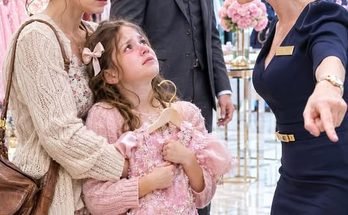
I was supposed to end my marriage the following day.
Everything had already been prepared.
But that evening, as I walked through our home, I heard my wife crying in the living room.
I stopped when I realized she was speaking to her mother.
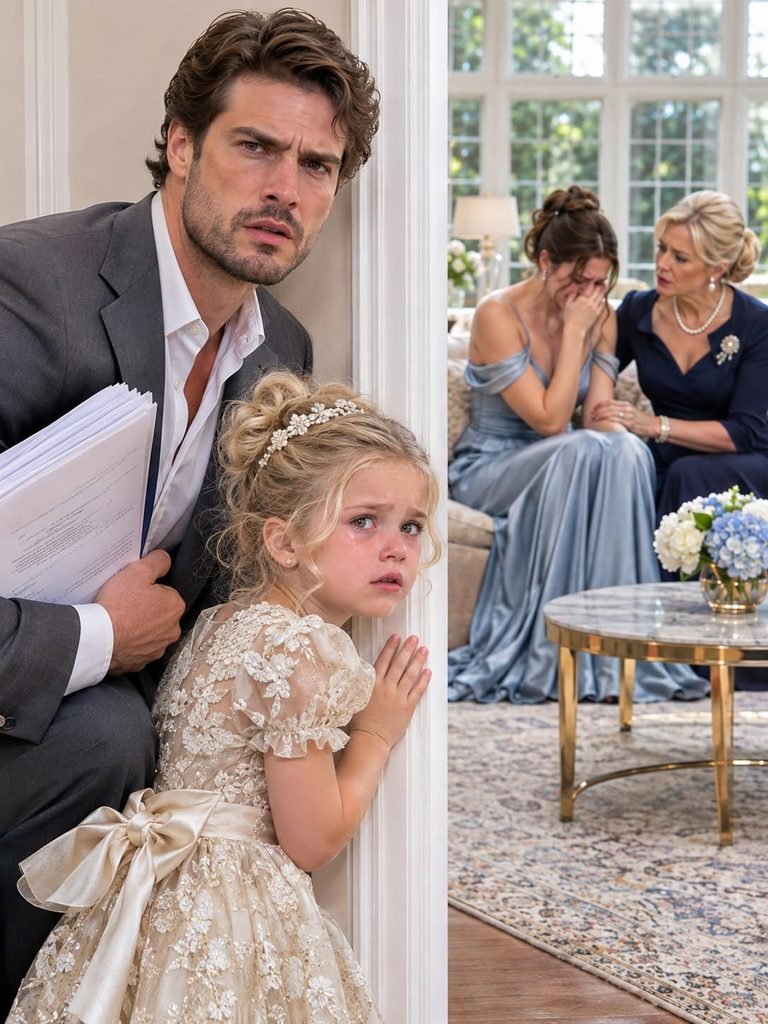
Her voice was quiet and unsteady.
“Mom… I love him too much to ask him to stay just because he feels obligated,” she said. “If he believes he’ll be happier without me, I have to respect that and let him go.”
I remained motionless in the hallway.
I hadn’t expected to hear those words.
In my hands were twenty-seven pages of divorce documents.
The agreement included a twenty-million-dollar settlement, enough to ensure Meredith would never have to worry about money.
I had convinced myself that offering her financial security was the kindest way to end our marriage.
For three years, I had lived with the belief that my wife had never loved me.
I thought she had agreed to marry me because her family’s business needed saving.
And because our relationship had started with a financial arrangement, I had assumed her feelings had never changed.
But now I was hearing something completely different.
She wasn’t talking about money.
She wasn’t asking how much she would receive after the divorce.
She was crying because she believed I wanted to leave her.
And she was willing to accept that decision if it meant I could be happy.
I stood there, struggling to make sense of what I had heard.
Then her mother began to answer.
As I listened, I started to realize that Meredith and I might have spent our entire marriage misunderstanding each other’s feelings.
We had been living under the same roof for three years, each believing something about the other that might never have been true.
And later that night, when we discovered a letter, another part of the story came to light.
It contained something neither of us had ever imagined.
A Marriage Built on an Agreement
My name is Grant Whitcomb.
I was forty-four years old, and I had founded Whitcomb Capital Partners, a private investment company headquartered in Charlotte, North Carolina.
By most people’s standards, I had done well in life.
Friends and business associates often called me successful.
Occasionally, financial magazines described me as brilliant because of the investment decisions I had made.
By my early forties, I had earned enough money that I rarely had to check the price of anything before buying it.
I had spent years learning how to make difficult decisions in business.
I knew how to evaluate investments, negotiate agreements, and protect the company I had built.
But there was one part of my life I had never managed to understand.
My marriage.
My wife, Meredith, was thirty-five years old.
We had been married for three years.
Unlike couples whose relationships began with romance, ours had started with an agreement.
At the beginning, neither of us expected that arrangement to develop into something personal.
I had believed we both understood exactly what our marriage was supposed to be.
For three years, I never seriously considered that Meredith might see it differently.
And until the night I heard her crying, I had no idea how much I might have misunderstood.
PART 2
Her father’s manufacturing company in Greensboro had been struggling after several important contracts fell through. Hundreds of employees depended on the business, and Meredith had spent months trying to protect their jobs.
My company had the resources to help.
At the same time, my board of directors had been encouraging me to settle down. They believed a stable family life would improve public confidence in my leadership.
Our marriage seemed to solve everyone’s problems.
Meredith’s family received financial support, and I gained the appearance of stability my board wanted.
We were respectful, practical, and careful about our expectations.
Neither of us promised love.
At least, not aloud.
The Woman Who Quietly Changed My Life
Meredith never behaved like someone who had married for money.
She rarely bought expensive things. She preferred quiet dinners at home to crowded charity galas, and she never asked to accompany me on business trips simply to enjoy luxury hotels.
Instead, she noticed things about me that nobody else seemed to remember.
She knew I preferred my coffee without cream, except on Sunday mornings when I added a little cinnamon.
She remembered that I disliked the smell of gardenias because they reminded me of my father’s memorial service.
When I returned home exhausted, she never demanded that I explain every problem from work.
Sometimes, she simply sat beside me on the couch and asked whether I wanted company.
One evening, about eight months after our wedding, I was working late in my study.
Meredith appeared carrying a small plate of food.
“You missed dinner again,” she said gently. “I thought you might be hungry.”
She placed the plate beside my computer and rested her hand on my shoulder.
I remember looking at her fingers and wishing she would leave them there a little longer.
That was the moment I began to understand how much she meant to me.
Unfortunately, I also began to fear losing her.
I knew why Meredith had agreed to marry me. Her family had needed help, and I had been able to provide it.
So I told myself that what I felt was my problem, not hers. She had kept her side of the bargain with grace. It would be a kind of theft to ask for a heart she had never promised.
So I said nothing. I worked later. I traveled more. I became, without deciding to, exactly the distant husband she might have expected, and I called it respect.
Meredith did the same. She never asked me to stay home. She never complained about the empty chair at Thanksgiving. She smiled at my board dinners and went quietly to bed. Each of us mistook the other’s care for courtesy, and each retreated a little further behind it.
The turning point came six weeks before that night, at a dinner for investors.
A man I barely knew, a fund manager named Preston Hale, had too much wine and leaned toward me with a smirk. “Must be nice,” he said. “Marrying into a deal. No messy feelings.”
I laughed it off. But when I looked across the room, Meredith was standing near the doorway, a glass of water in her hand, very still. She had heard him.
She didn’t say a word on the drive home. I didn’t either.
That night I lay awake and decided I had made a terrible mistake. Not in marrying her, but in letting her stay trapped in a marriage she had entered out of duty. Her father’s company had stabilized. The loan had been repaid with interest. She owed me nothing. And I, I told myself, owed her a way out.
I called my attorney the next morning. The agreement he drafted was generous to the point of absurdity: the house, a twenty-million-dollar settlement, and a clause guaranteeing her family’s company would keep my investment regardless of what happened between us.
I thought that was love, in its way. The only kind I’d been allowed to give.
PART 3
Standing in the hallway that evening, I heard Meredith’s mother, Colleen, speak at last.
“Sweetheart, listen to me. Do you know why your father agreed to the marriage?”
“For the company, Mom. I know.”
“No.” Colleen’s voice was steady, almost fierce. “Because you asked him to.”
Silence.
“Three years ago, your father didn’t want to accept Grant’s money. He was too proud. He told you he’d rather close the plant than owe a stranger. And you went to Grant’s office anyway.”
“I went to ask for a loan.”
“You went to ask for a loan, and Grant said he couldn’t structure one that wouldn’t ruin your father’s pride. And then he said the board wanted him married.” Colleen paused. “Meredith. You told me that night, in this kitchen, that you’d marry him because you’d already been in love with him for two years.”
My knees nearly gave out.
“Mom, don’t.”
“You never told him. You said an arrangement was the only way he’d ever let you near him. You said if he knew, he’d think you were lying to get at his money.”
I heard Meredith crying harder. “He would have.”
“Would he?” her mother said gently.
I didn’t stay to hear the answer. I walked into the living room with the divorce papers still in my hand.
Meredith looked up, her face wet, her eyes wide with terror. Colleen rose slowly from the couch.
“I’ll give you two a moment,” she said, and left the room.
For a long time, neither of us spoke.
“I heard you,” I said finally. “I’m sorry. I didn’t mean to listen. I came to…” I looked down at the papers. “To give you these. Tomorrow.”
Meredith stared at the stack, and her whole body seemed to fold inward. “I know. I found the draft in your study last week.” She wiped her face with the heel of her hand. “I wasn’t snooping. I was looking for a stapler.”
I almost laughed. It came out as a broken sound.
“Is it true?” I asked. “That you loved me when we married?”
She nodded, barely.
“Why didn’t you say anything?”
“Why didn’t you?” Her voice cracked. “You never said one word, Grant. For three years I sat across from you at dinner and watched you be kind, and I told myself kindness was all there was.”
“I thought you’d only married me to save the business.”
“I married you because I loved you.”
“I thought you’d feel trapped if I told you.”
“I felt trapped not knowing.”
We stood in the living room, three feet apart, two intelligent people who had spent three years behaving like strangers because each of us had been too afraid of being a burden.
I set the papers on the coffee table.
“I don’t want to sign these,” I said.
“Grant…”
“I wrote them because I thought you wanted out. I wanted to give you everything so you could leave without fear.” My voice shook. “I’ve been in love with you since the night you brought me a plate of food and put your hand on my shoulder. I just never thought I was allowed to say it.”
She put her hand over her mouth.
“Say it again,” she whispered.
“I love you, Meredith.”
She crossed the room and I caught her, and she was shaking, and so was I.
Later that night, long after Colleen had gone to bed in the guest room, we sat on the floor of my study, the twenty-seven pages between us. I reached for the folder to tear it up, and a small cream envelope slid out of the back.
It was addressed in a hand I didn’t recognize. To Grant Whitcomb, to be opened if he ever tries to leave her.
Meredith frowned. “That’s my father’s handwriting.”
Inside was a single page, dated the week of our wedding.
Grant,
If you are reading this, then I was right to worry. I don’t know you well, but I know my daughter. She has been in love with you since long before you saw her. I told her not to marry you for my sake. She said it wasn’t for mine.
I can’t make you love her. But I can tell you this: she will never ask you to stay. She will let you walk out the door and smile while she does it, because she’d rather lose you than be a burden. If it comes to that, I’m asking you to stop and ask her one question before you sign anything:
“Do you want me to go?”
She will say yes, to protect you. Ask again. And listen to what she doesn’t say.
I wish I could have been a better father to a girl who loves this carefully.
Frank Dunmore
Meredith had begun to cry again, silently. “He never told me he wrote this.”
“He knew,” I said. “He knew both of us.”
I took her hand.
“Meredith. Do you want me to go?”
She laughed through tears, and it was the most beautiful sound I’d heard in three years.
“No,” she said. “Stay. Please. And not out of obligation. Because you want to.”
“I want to,” I said. “I have for a long time.”
We burned the papers in the fireplace the next night, page by page. Meredith insisted on keeping the final one. She framed it with the envelope, a reminder of how close two people can come to losing each other by being too kind.
Her father came to dinner that Sunday. He shook my hand for a long time without saying anything, and then he cleared his throat and said, “I see you read my letter.”
“I did, sir.”
“Good.” He looked at his daughter, then back at me. “Don’t make me write another one.”
I didn’t.
We renewed our vows a year later, in the garden behind her family’s old house in Greensboro, with no board members, no investors, and no agreement. Meredith carried gardenias, because she’d learned long ago what they meant to me, and wanted, she said, to give them a better memory.
When I smelled them that day, I didn’t think of my father’s funeral.
I thought of a plate of food, a hand on my shoulder, and a wife who had loved me carefully for three years while I loved her just as quietly.
We had spent so long being polite.
Now, at last, we were honest.
And it was the best agreement I ever made.