For Lucy, when she’s ready to stop carrying everyone alone.
My hands went still.
“Colleen,” I said slowly. “What is this actually about?”
She sat down across from me, folding her hands the way she used to when she was about to deliver bad news gently.
“Your father changed some things after his diagnosis,” she said. “Quietly. Without telling your mother, because he knew exactly what she’d do if she found out beforehand.”
I unfolded the first document.
It was a durable power of attorney for healthcare, dated four months after his stroke.
My name was on it. Not my mother’s. Not Chelsea’s.
Mine.
“He said you were the only one who actually showed up,” Colleen said softly. “Every appointment. Every pharmacy run. Every 2 a.m. call. He noticed, Lucy, even when he couldn’t always say it.”
Underneath the power of attorney was something else, a separate folder, sealed, with my name written across the front in the same shaking handwriting.
“He told me not to give you that one unless things got bad,” Colleen said, watching my face carefully. “He said you’d know when it was time.”
I thought about the eleven missed calls, the voicemail ordering me to “deal with Dad” like I was staff clocking in for a shift, the photograph of my son shoved behind an electric bill in a kitchen drawer three miles away.
I thought it was time.
I broke the seal.
Inside was a single folded letter, and clipped to it, a bank document with a balance that made my breath catch, an account my father had quietly built and protected for years, completely separate from anything my mother controlled or even knew existed.
The letter began:
Lucy, if you’re reading this, it means I couldn’t tell you myself, so I need you to hear it now, in my own words, before anyone else gets the chance to twist it…
My hands were shaking as I read the next line, because whatever came after it, I already understood one thing with total certainty.
My father had seen everything. The favoritism. The exhaustion. The years I spent being useful instead of loved.
And he had made sure that, no matter what happened next, I wouldn’t walk away from this family with nothing.
Colleen reached across the table and covered my hand with hers.
“Keep reading,” she said quietly. “There’s more. And Lucy… you’re going to need to sit with this before you go back to your mother’s house tomorrow.”
I unfolded the rest of the letter with hands that wouldn’t quite steady themselves, Colleen watching from across the table, her tea going cold and untouched between us.
Lucy, I need you to hear this without your mother’s voice in your head telling you what to feel about it. For years I watched her measure love in performances, birthday parties photographed for likes, Carter’s school awards framed in the hallway, while you were handed the actual weight of this family and told to carry it quietly so no one else had to. I let it go on longer than I should have. I told myself it was easier not to fight her on it. That was my failure, not yours, and I need you to know I saw it, every bit of it, long before the stroke made it harder for me to say so out loud.
The account attached to this letter has been building since before my diagnosis. It isn’t much compared to what your mother thinks this family is worth, but it’s clean, it’s yours, and it was never meant to be split with anyone who spent these years pretending you didn’t matter as much as your sister.
The healthcare directive names you because I trust you to make decisions based on what I actually need, not what looks good to relatives at a barbecue. If your mother tries to fight it, Colleen has copies notarized and filed. She will not be able to undo this.
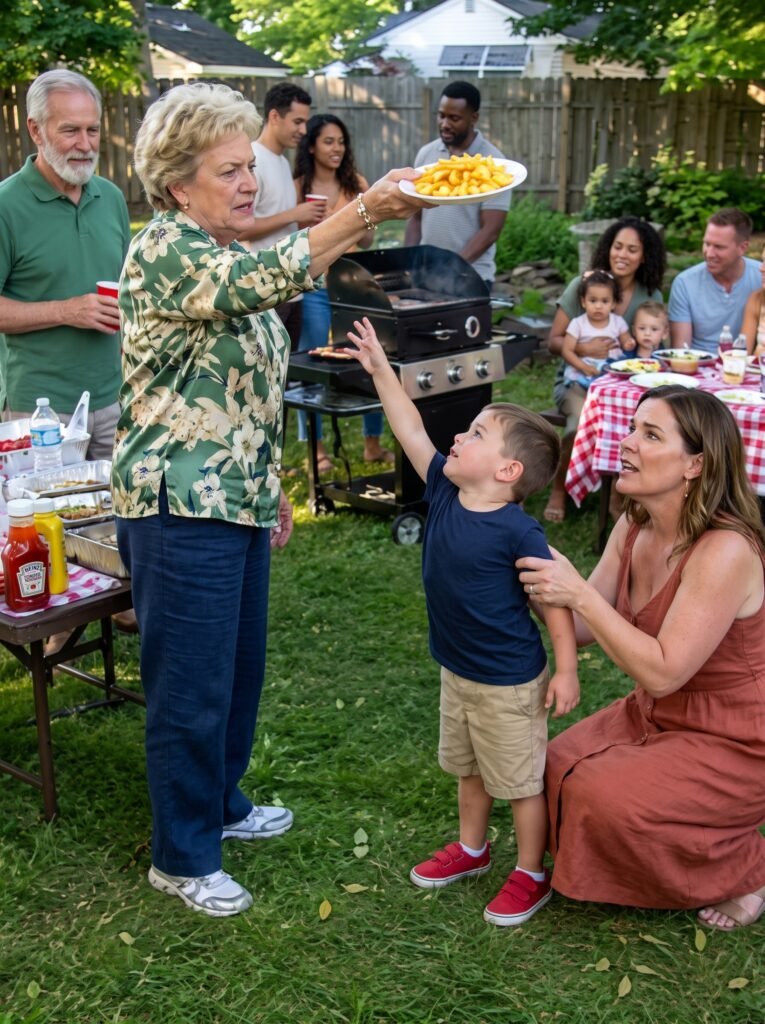
One more thing. I know about Dany, and the fries, and the way this family treats him like an afterthought. I should have said something the first time I saw it happen. I’m saying it now instead: that boy is exactly as real as any grandchild in this family, and if anyone ever tells him differently again, I want you to know I would have stood between them and him without a second of hesitation, sick or not.
Take care of yourself first this time. You’ve spent years taking care of everyone else.
Love, Dad.
I set the letter down and realized I’d been crying for longer than I noticed, quiet tears that Colleen didn’t rush to interrupt.
“He wrote that four months ago,” she finally said. “Before the last hospital stay. He made me promise I wouldn’t give it to you unless he was gone, or unless things with your mother got bad enough that you needed proof someone in this family actually saw you clearly.”
“She’s going to lose her mind when she finds out,” I said quietly, still staring at the bank document, at the healthcare directive with my name on every line that mattered.
“She might,” Colleen agreed. “But Lucy, that’s not your problem to manage anymore. That’s the whole point of what he did here.”
I thought about the message still sitting unanswered in my phone, my mother’s instruction to come deal with Dad first thing in the morning, written like an order instead of a request.
I thought about Dany’s face lighting up over a basket of fries a stranger gave him without being asked, more warmth from a diner waitress than four years from his own grandmother.
I folded the letter carefully and placed it back in the box, along with the photographs my mother never bothered to keep, the proof that for at least one person in that family, I had never been invisible at all.
“I need to go see my father,” I told Colleen. “Tonight. Before anyone else finds out what’s in this box.”
“And your mother?” she asked. “She’s still waiting for you tomorrow morning.”
I looked down at the healthcare directive one more time, at my own name in shaking handwriting that had refused to let me disappear.
“Let her wait,” I said. “Some things are more important than showing up on command.”
I gathered the box, thanked Colleen, and drove straight to the rehabilitation center, because for the first time in years, I wasn’t going somewhere out of obligation.
I was going because my father had finally, quietly, made sure I knew I never had to earn that right.
The rehabilitation center was quiet by the time I arrived, most of the lights dimmed for the night except for the nurses’ station and the soft glow spilling from under my father’s door.
He was awake when I walked in, propped up against the pillows, and when he saw the shoebox tucked under my arm, something in his face shifted, not surprise, but relief, like a weight he’d been carrying finally had somewhere to land.
“Colleen gave it to you,” he said, his words still a little slow from the stroke, but clear enough.
“She did.” I sat in the chair beside his bed and set the box down. “Dad, why didn’t you just tell me?”
“Because I know my daughter,” he said. “You would have told me not to bother. You would have said it wasn’t necessary, that you didn’t do any of it for a reward.” He reached for my hand, his grip weaker than it used to be but steady in intention. “I needed you to have it whether you thought you deserved it or not.”
I told him everything then, the fries, the plate lifted out of Dany’s reach, the laughter that followed us to the gate, the diner and the stranger who gave my son more warmth in ten minutes than his own family managed in years. My father listened without interrupting, his jaw tightening at the parts that deserved it.
“She did that in front of everyone?” he asked quietly.
“She did.”
He was silent for a long moment, staring at the ceiling like he was recalculating something he’d let slide for too long.
“Lucy, I want the directive filed with the hospital administration this week. Not because I don’t trust your mother to visit me. Because I don’t trust her to make decisions about me that aren’t really about her.”
“I’ll take care of it,” I said.
“And the account,” he added. “Don’t let anyone talk you into splitting it evenly, out of guilt or peace-keeping. It was never about being fair between you and your sister. It was about finally being fair to you.”
I stayed until visiting hours forced me out, and when I finally checked my phone in the parking lot, I had fourteen missed calls from my mother and a single new message, sent twenty minutes earlier:
Where are you? You need to be here in the morning. This isn’t the time to be dramatic.
I thought about the letter in the box beside me, my father’s shaking handwriting insisting that boy is exactly as real as any grandchild in this family. I thought about nine photographs of Carter on a refrigerator and one photo of Dany hidden behind an electric bill.
I typed back four words and nothing more.
Dad is being cared for.
Then I drove home, gathered Dany from where he’d fallen asleep on the couch waiting for me, and carried him to bed without a single voicemail interrupting the quiet.
The next morning, I didn’t go to my mother’s house. I filed the healthcare directive with the hospital, met with a lawyer about the account, and took Dany to the same little diner with the red neon sign, where the same waitress remembered him by name and brought out his fries before he even had to ask.
My mother called eleven more times that week. I answered exactly one.
“You humiliated me,” she said, before I could even say hello. “In front of the whole family.”
“No,” I said. “You did that yourself, the day you told my son he wasn’t real enough to deserve a plate of fries. I just stopped showing up to clean up what that cost you.”
She didn’t have a response for that. For the first time in my life, neither did I need her to.
Months later, my father’s health stabilized enough for him to come home, into a small apartment near mine instead of my mother’s house, a choice he made clearly and without apology. Chelsea still gets her praise online, still gets the photographs and the comments calling her an angel.
But every night, I tuck my son into bed knowing exactly who in that family actually saw him.
It was never my mother. It was never Chelsea.
It was the quiet man in the hospital bed who spent his last clear months making sure I’d never again mistake being used for being loved.