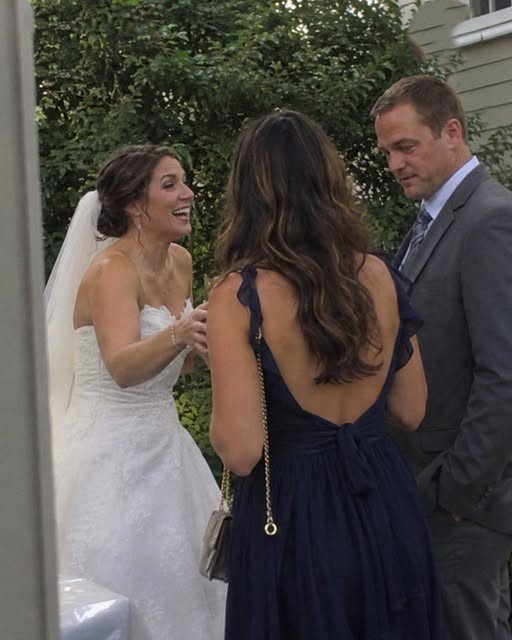
I received a thank-you card for a wedding I never attended, addressed to both my husband and me. At first, I thought it was a harmless mistake. Then the bride showed me a photograph, and I realized a complete stranger had been living my life for one evening.
My husband and I had been married 16 years when a thank-you card arrived for a wedding I had never attended.
At first, I thought it was a harmless mistake.
By the end of that week, I was questioning almost everything Mark had ever told me about how he saw our life together.
I’m Rebecca, 39, and Mark is 41.
We have two children, Oliver, 14, and Sophie, 11.
We live in a three-bedroom house that always seems to need another repair.
I work part-time as a teaching assistant at an elementary school.
Mark supervises a sales team at a building supply company.
We aren’t wealthy, but I thought we were happy.
Before the children were born, I worked in marketing.
I loved the job.
When Oliver arrived, the hours and childcare costs became difficult, so Mark and I agreed I’d stay home for a while.
A while became several years.
When Sophie started school, I took the teaching assistant job because the schedule worked for our family.
Mark used to say he appreciated everything I did.
I believed him.
Three weeks before the card arrived, Mark told me he was going fishing with college friends for the weekend.
“Ethan’s coming,” he said over dinner. “You remember Ethan?”
“The friend you reconnected with?”
“Yeah. It’ll be good to get away.”
Ethan had been Mark’s roommate in college.
They’d lost touch before our wedding and started talking again about two years earlier.
I’d never met him.
I packed sandwiches for Mark’s drive because he complained about highway food.
On Saturday morning, he kissed me goodbye and told the kids to listen to their mother.
That afternoon, I took Sophie to a volleyball tournament.
She won a small medal, and I sent Mark a picture.
“That’s my girl,” he texted back. “Give her a kiss for me.”
He came home Sunday evening, tired but cheerful.
“Did you catch anything?” I asked.
“Not much. We mostly sat around talking. Same old idiots.”
He unpacked his bag, helped Oliver with homework, and went to bed.
Nothing seemed unusual.
Then the card arrived.
It was addressed to Mark and his wife, with a handwritten note inside.
“Thank you both for coming to our wedding! Rebecca, you saved my dress when the train loop broke. I’m so glad we finally met. Love, Ethan and Tessa.”
I read it twice.
I hadn’t been to a wedding, and I certainly hadn’t fixed a bride’s dress.
That evening, I left the card beside Mark’s plate.
“Do you know anything about this?”
He read it and shrugged.
“Ethan got married that weekend. Some of us stopped by the reception.”
“While you were fishing?”
“On Saturday night.”
“Why didn’t you tell me?”
“It wasn’t a big deal.”
I pointed at the message.
“She’s thanking me for fixing her dress.”
“She probably confused you with another guest. They must’ve sent a hundred cards.”
I wanted to believe him.
But Tessa hadn’t written a generic thank-you.
She remembered meeting someone who introduced herself as me.
The next morning, after Mark left for work, I found Tessa through Ethan’s Facebook profile.
“Hi, I’m Mark’s wife. We got your lovely card, but I wasn’t at your wedding. I think there may have been a mix-up.”
Her answer arrived about an hour later.
“I’m so sorry. He introduced this woman as his wife.”
Underneath was a photograph.
Mark stood beside a woman in a dark green dress.
His arm circled her waist, and her hand rested against his chest.
They were smiling directly at the camera.
I recognized the tie I’d bought him for our anniversary.
I stared until my eyes hurt.
“Do you know who she is?” I typed.
“No. We exchanged numbers so I could send her pictures. Would you like it?”
I said yes.
My hands were shaking when I texted the stranger.
“Tessa gave me your number. I’m Mark’s wife. Why were you at her wedding using my name?”
She responded almost immediately.
“Can I call you?”
I stepped onto the porch before answering.
“I’m Lauren,” she said. “I need you to know he told me you agreed to everything.”
“Agreed to what?”
“He hired me.”
I sat down.
Lauren explained that she was an actress who sometimes worked corporate events and private functions.
Mark had contacted her through a legitimate booking website and paid $700 for the evening.
“He said you didn’t want to attend,” she continued. “He told me you were both comfortable with someone standing in for you.”
“Why would I want that?”
“I don’t know. I mostly don’t ask questions.”
“Why did you use my name?”
“Because he asked me to. I’m sorry.”
I pressed my fingers against my forehead.
“What did he tell you about me?”
“Can I send you his instructions? I think you should read his exact words.”
A screenshot appeared.
“My wife Rebecca is a corporate attorney handling international contracts. She travels often, so she may not remember people I’ve mentioned. We’ve been married for 16 years and live in a large house outside the city. If someone asks about our trips or charity events, let me answer.”
A second message said, “Dress elegantly. She comes from a very successful family. Everyone knows her as a high-powered lawyer.”
I wasn’t a lawyer.
My parents were a postal worker and a receptionist.
And the biggest charity event I’d attended recently was a school bake sale.
I asked Lauren to send everything.
She did, including a document titled “Background for Wedding.”
It described a woman who shared my name, my husband, and my children, but none of my real life.
I thanked Lauren. She sounded genuinely upset.
“I never would have taken this booking if I’d known you weren’t aware,” she said.
I believed her more easily than I believed my husband.
Mark came home at 6:00 p.m. to find me sitting at the kitchen table.
The children were upstairs. Dinner was in the oven.
“Everything okay?” he asked.
“Who is Lauren?”
His smile vanished. “What?”
“The woman you paid to pretend she was your wife.”
He put down his briefcase. “Rebecca, let me explain.”
“Start with why you did this.”
He pulled out a chair but didn’t sit.
“I didn’t cheat. Nothing happened between us.”
“I didn’t ask whether you slept with her.”
“Then what are you accusing me of?”
“Paying a stranger to be me. Lying about where you went. Telling people I’m an attorney. Which accusation should I start with?”
He finally sat down. “It’s complicated.”
“Try me.”
He rubbed both hands over his face.
“When Ethan and I started talking again, everyone was doing well. Ethan owns his company. David became a surgeon. Paul sold a business.”
“And?”
“And I felt like the only one who hadn’t accomplished anything.”
“You’re employed. We own a home. We have two wonderful kids.”
“That’s not what they talk about.”
I waited.
“I exaggerated some things,” he admitted. “Then they kept asking questions, and I couldn’t take it back.”
“For how long did you do this?”
“Two years.”
I looked at him.
“For two years, you’ve been describing someone else as your wife?”
“I was describing you. Just with a different job.”
“No. You weren’t.”
He looked away.
“Why an attorney?” I asked.
“It sounded impressive.”
There it was. The answer I’d been afraid to hear.
I told him I needed to see the conversations with his friends.
He argued that they were private.
I reminded him he’d made my identity part of them.
Eventually, he handed over his phone.
The group chat was called “College Legends.”
In one exchange, Ethan asked how I was doing.
“Great,” Mark wrote. “Rebecca’s leading an international legal team now.”
That week, I’d spent two days at home with Sophie, who had a stomach bug.
Another message showed a photograph of a mansion with a pool.
“Finally finished our backyard renovation,” Mark had written.
“Whose house is this?” I asked.
“I found it online.”
He’d also posted pictures of a hotel in Paris and claimed we went there for our anniversary.
On that anniversary, we’d ordered pizza because Oliver had a fever.
I kept scrolling.
Someone mentioned an expensive charity dinner.
“Rebecca and I attend every year,” Mark replied.
It was astonishing how much effort he’d put into appearing wealthy.
“Why didn’t you bring me to the wedding?” I asked.
“Because somebody would’ve asked about your cases or your travels. You wouldn’t have known what to say.”
“I would’ve said I wasn’t a lawyer.”
“Exactly.”
He said the word before realizing what it meant.
I handed him the phone.
“You weren’t protecting me from embarrassment. You were protecting yourself from the truth.”
We stopped talking when Oliver came downstairs asking about dinner.
I managed to get through the meal. Afterward, Mark tried to hug me.
I stepped away. “Please don’t.”
He lowered his arms. “I love you.”
“Then why wasn’t being married to me enough?”
He didn’t answer.
I slept in the guest room.
The next day at school, a second grader handed me a picture she’d drawn of us standing under a rainbow.
“That’s you helping me read,” she said.
I thanked her and put it in my desk.
For years, I’d been proud of my work.
I helped children who struggled to sound out words.
I knew which students needed quiet encouragement and which ones needed someone to believe they could improve.
I wasn’t rich, and I didn’t have a fancy title.
I’d never thought those facts made me less worthy of respect.
Now I wondered how long Mark had.
That afternoon, I opened Lauren’s document again.
One line read, “Rebecca doesn’t spend much time on household matters because of her demanding career.”
I thought of the birthday cakes I’d baked, the uniforms I’d washed, and the years I’d spent balancing our family around Mark’s hours.
He’d invented a woman too important to do any of it.
I called Tessa.
She apologized again, but I told her she hadn’t caused this.
“Did Mark really talk about me that way?” I asked.
“Yes,” she said. “I thought you sounded amazing.”
“I’m a teaching assistant.”
“That’s amazing too.”
I laughed, then unexpectedly started crying.
Tessa waited.
“I was looking forward to meeting you,” she said. “I volunteer with kids who have reading difficulties. We would’ve had plenty to talk about.”
My husband had kept me from people who might have liked the real me.
Ethan called later that evening.
Mark had admitted to him that the wedding guest was an actress, though he hadn’t yet told his friends the full story.
“I’m embarrassed I believed him,” Ethan said.
“You had no reason not to believe him.”
“He always seemed so worried about keeping up with everyone. I thought he was just enthusiastic.”
I asked whether Mark had ever needed to impress them.
“No,” Ethan said. “We were friends when we were broke college students eating noodles. Nobody invited him because of his house or his wife’s job.”
I wanted Mark to hear that.
Instead, I asked Ethan not to spread details until Mark had the chance to tell the group himself.
When I told Mark about the calls, he became angry.
“You’re turning everyone against me.”
“Your friends are upset because you lied to them.”
“You could’ve kept this between us.”
“You took a woman to a wedding and introduced her as me. It stopped being between us the moment you did that.”
He paced the kitchen. “I didn’t want them looking down on us.”
“Then why did you choose a different version of me?”
He stopped. “Because I thought you’d understand.”
“Understand what? That I wasn’t impressive enough?”
His eyes filled. “It wasn’t about you.”
“Then why did you erase everything I’ve actually done?”
I reminded him that leaving marketing had been our shared decision.
“You were the one who suggested I stay home with Oliver. You told me we’d make it work.”
“I know.”
“You used to thank me for raising our children while you built your career. Did you mean it?”
“Of course.”
“But when you wanted to impress your friends, the real story wasn’t good enough.”
He sat down heavily. “I felt like a failure.”
I believed him.
I could even feel sorry for the young man he’d once been, desperate to prove himself.
But he was 41 now. His insecurity had turned into choices that humiliated me.
“I need some space,” I said.
“Rebecca, please.”
“I’m not deciding our whole future tonight. But I can’t keep pretending things are normal.”
Mark moved into a small apartment the following week.
We told Oliver and Sophie that we were having problems and would live separately for a while.
We made sure they understood they weren’t responsible.
Sophie cried and asked whether Daddy would still come to her volleyball games.
“Every one I can,” Mark promised.
Oliver wanted to know if we were divorcing.
“I don’t know yet,” I told him.
It was the hardest honest answer I’d ever given my children.
Then he suggested a weekend getaway.
“Please don’t buy me things,” I told him. “I need you to understand what you did.”
He started seeing a counselor.
A week later, he showed me a message he’d written to his college friends.
The first draft blamed his insecurity and made the actress sound like a misunderstanding.
“You’re still explaining instead of admitting,” I said.
He rewrote it.
In the final message, he told them I’d never been an attorney.
He admitted that our house and trips were ordinary, and that he’d hired Lauren because he feared they’d discover he’d lied.
He made it clear I hadn’t known.
The responses were painful for him.
Ethan wrote that he didn’t understand why Mark thought their friendship depended on money.
David said he was disappointed.
One friend didn’t respond at all.
Mark called me afterward.
“They’ll never respect me again.”
“Maybe they’ll need time,” I said. “But you don’t get to decide how quickly they trust you.”
He was quiet. “You’re right.”
It was the first time he’d accepted an answer without trying to change my mind.
Two months after the wedding, Tessa invited me to lunch.
I almost declined, afraid I’d feel awkward.
Instead, we talked for nearly two hours about our children, my school, and her volunteer work.
At one point, she said, “I’m glad I finally got to meet you.”
I smiled. “Me too.”
On the drive home, I cried.
Not because she’d been unkind.
Because meeting her had proved how unnecessary Mark’s deception was.
Over the next few months, Mark kept attending counseling.
Sometimes he shared what he was learning about comparing himself with other people.
Other times, he just listened when I told him I was still hurt.
We began marriage counseling too, but he remained in the small apartment.
He was more honest, and I could see he was trying.
Still, I needed time to decide whether I could trust him again.
Last week, he asked whether I thought he might come home someday.
“I don’t know,” I said.
“Do you still love me?”
“Yes. But I don’t believe everything you say.”
“I understand.”
“I’m proud of my work, Mark. I’m proud of our house and our children. I’m not interested in being somebody else so your friends will admire us.”
“I know.”
“If we stay married, you need to be proud of the life we actually have.”
He looked straight at me.
“I want to learn how.”
I hope he does.
I don’t know yet whether our marriage will survive.
Sixteen years of trust can’t be repaired with one apology or a few months of better behavior.
But I know who I am.
I’m Rebecca.
I’m a mother, a former marketing professional, and a teaching assistant who helps children learn to read.
I live in a modest house, cook most of our meals, and have never been to Paris.
And I will never again let my husband invent who I am.
If Mark wants a future with me, he’ll have to choose the wife he actually married.
Not the one he paid $700 to pretend existed.